The Cable That Could Have Changed the Maldives: MVR 236 Million Invested, Digital Opportunities Still at Risk
OCM-IAX, public accountability and the competing priorities of digital infrastructure and the Rasmalé land-reclamation project
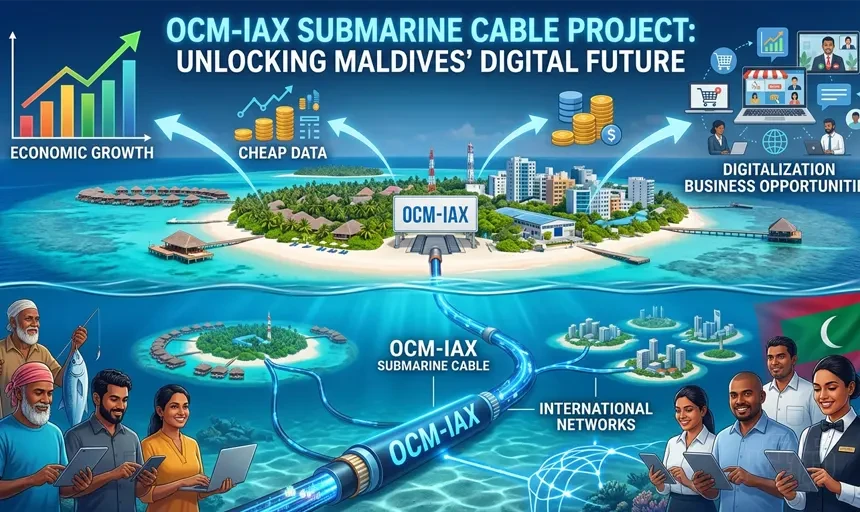
The central issue in the OCM-IAX submarine cable controversy is not simply whether the Maldives has built an international fibre-optic connection. It is whether the country can turn that infrastructure into an operating telecommunications business, recover public investment, reduce wholesale internet costs and create the conditions for new digital industries. The distinction between a cable being physically connected and a service being commercially operational is essential to assessing the project's financial and economic consequences.
This probe separates documented financial figures and official decisions from estimates of lost economic opportunities and political criticism. It also examines the Rasmale (Fushidhiggaru) development as a separate public-investment issue, rather than treating every coin spent on one project as money that could automatically have been transferred to the other.
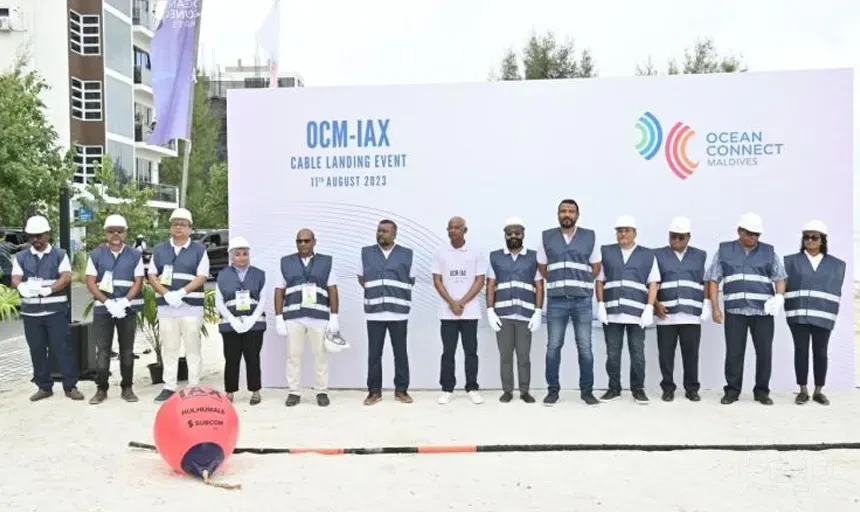
Ocean Connect Maldives' official report on the IAX cable landing in Hulhumalé, 11 August 2023
A state-backed submarine cable project intended to strengthen the Maldives' international internet connectivity, reduce wholesale bandwidth costs and open new opportunities in the digital economy has become a test of public investment management. The OCM-India Asia Express (IAX) project reached a major physical milestone in August 2023, when the cable landed in Hulhumalé. Yet reporting published in October 2026, citing the Auditor General's findings, says the project remains stalled, with funding constraints, unpaid liabilities and delays preventing the infrastructure from delivering its intended commercial benefits.
The project's predicament raises questions that go beyond one state-owned company:
- How much public money is tied up in infrastructure that has not delivered its intended service?
- What could Maldivian households, businesses and the wider economy have gained from a functioning additional international gateway?
- Why has the administration of President Dr Mohamed Muizzu not brought the project into operation, despite its August 2024 decision to continue it?
- And how should the public assess the opportunity cost of major land-reclamation initiatives such as Rasmalé, also known as the Fushidhiggaru Falhu project?
The available record supports serious questions about delays, financing and the failure to realise the project's intended benefits. It does not, on its own, establish that every loss was caused by one administration, that all anticipated consumer savings would necessarily have materialised, or that the entire cost of Rasmalé could have been redirected to telecommunications. Those distinctions matter if the debate is to be based on evidence rather than political assertion.
1. The project: an international gateway built for a digital economy
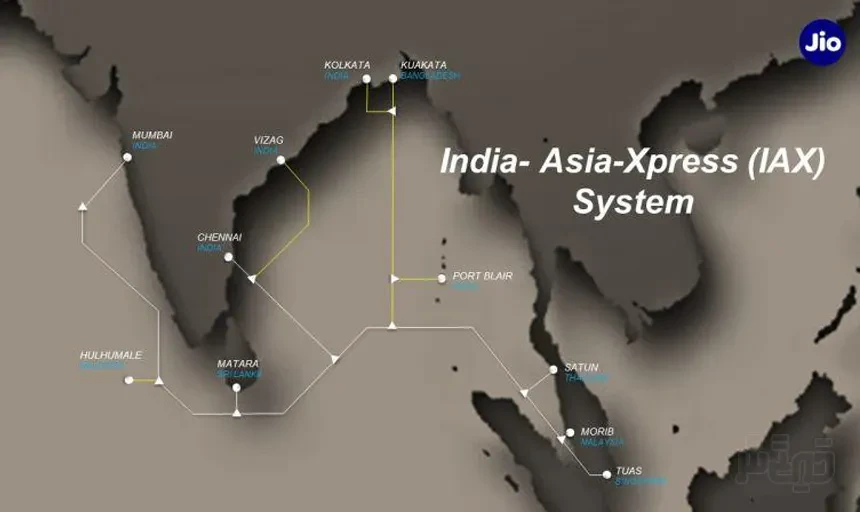
The OCM-IAX initiative was developed by Ocean Connect Maldives (OCM), a government-owned company established under the Maldives Fund Management Corporation (MFMC). In February 2022, OCM signed an agreement with India's Reliance Jio Infocomm to connect the Maldives to the India-Asia Express submarine cable system.
The agreement was reported at approximately US$ 22.5 million, equivalent at the time to about MVR 346.95 million. The cable landed at the OCM site in Hulhumalé on 11 August 2023. The international system connects regional telecommunications hubs, including Mumbai and Singapore, and was intended to give the Maldives access to greater international bandwidth capacity.
The distinction between the international cable and OCM's own business is important. The IAX system is a regional submarine cable network. OCM's role is to establish a Maldivian landing point and associated infrastructure, secure international connectivity and sell wholesale capacity or related services to domestic internet service providers and other customers.
In principle, a new independent international gateway can help diversify supply, improve network resilience, increase competition for wholesale capacity and provide more routes for international data traffic. These benefits depend on commercial agreements, functioning landing-station equipment, terrestrial connectivity, financing, regulatory arrangements and customers actually purchasing the capacity.
A cable landing ceremony is therefore a milestone, not proof that a commercial internet service is operating. OCM's own stated mission describes a goal of inclusive digital networks and affordable connectivity. Its original broader ambitions also included a nationwide municipal network and a large data centre, although these should be treated as separate development plans rather than completed outcomes of the IAX cable itself.
2. The financial record: what is at stake?
The figures reported to date show a substantial commitment of public capital, additional borrowing exposure and obligations that have not been fully settled. They must be read in their proper categories: the original contract value is not the same as cash spent, a loan guarantee is not the same as a cash loss, and an unpaid bill is a liability rather than proof of fraud.
| KEY REPORTED FINANCIAL FIGURES | |
MVR 236m |
MVR 224.8m |
| Reported project expenditure by the end of 2023 | Reported government equity invested in the project |
US$22.5m |
MVR 231m |
| Original reported OCM–Jio agreement value | Approximate value of the 2024 sovereign-guaranteed loans |
| Sources: October 2026 reporting on the project and audit findings; the 2024 report on the sovereign guarantees. Figures relate to different financial categories and should not be added together as though they represent separate losses. | |
The spending, the unpaid bills and the borrowing exposure
By the end of 2023, approximately MVR 236 million had reportedly been spent on project activities, while government equity contributions were reported at MVR 224.8 million. Reporting on the 2023 audit also identified an unpaid amount of MVR 19.9 million owed to the cable landing-station contractor. These numbers indicate the scale of the capital already committed and the need to establish the exact status of project assets, outstanding obligations and remaining costs.
In March 2024, the government granted sovereign guarantees linked to two Bank of Ceylon loans: MVR 115.7 million and US$ 7.5 million. Together, these were reported at approximately MVR 231 million. A sovereign guarantee means the government may be responsible if the borrower cannot meet the guaranteed obligations under the applicable terms; it does not mean that the full guaranteed amount has already been lost.
In August 2024, President Muizzu's administration announced that the project would proceed without changes and that the government would finance US$ 2.92 million owed in equity so loan disbursements could resume. This was an explicit decision to continue the project, rather than abandon it. The subsequent failure to bring the infrastructure into operation makes the implementation of that decision a central issue for public scrutiny.
A further reported warning concerns unpaid supplier and contractor liabilities within the MFMC group. October 2026 coverage of the MFMC Capital audit says these liabilities rose from MVR 5.8 million to MVR 133.9 million, with almost all attributed to the cable project, and reports MVR 7.9 million in fines and warehouse charges associated with late supplier payments. These are material additional costs, but the precise composition, periods and entities involved should be checked against the full audit schedules before treating the entire amounts as direct losses attributable to OCM.
Financial Exposure: Reported OCM-IAX financial figures
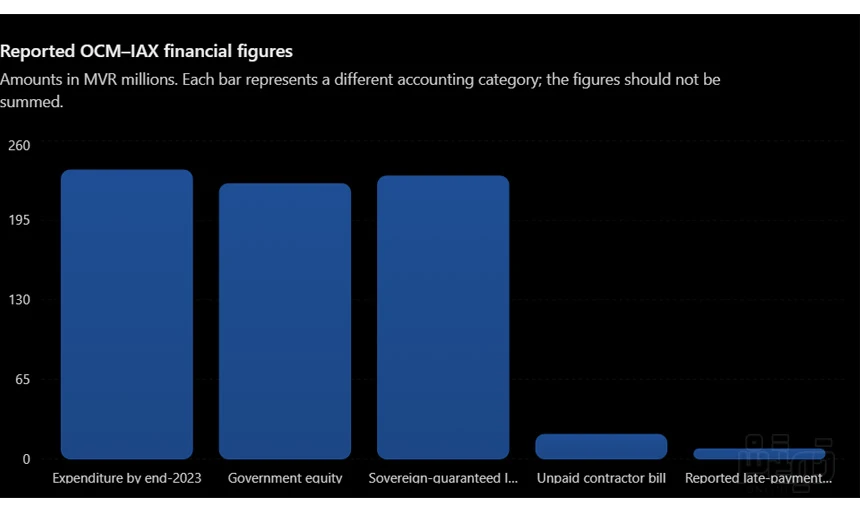
sources: project expenditure and contractor bill reported in 2026; equity and loan figures from published project coverage. The MVR 7.9m relates to late-payment fines and warehouse charges reported in the MFMC Capital coverage and is not necessarily an OCM-only expense.
The chart shows why public accountability requires more than quoting one headline figure. The MVR 236 million expenditure figure is a historical spending measure. The MVR 224.8 million equity contribution is a financing measure. The MVR 231 million guarantee is a contingent public exposure, and the contractor bill is part of the unpaid obligations. A proper assessment must reconcile these categories with cash flows, assets, liabilities, debt repayments and any impairment of project assets.
3. What the audits say - and what they do not say
The audit trail is central to determining whether this is primarily a financing problem, a project-management failure, a governance failure or a combination of all three.
The Auditor General's Office lists OCM's 2022 financial-statement audit as issued on 5 February 2024, prepared by Ernst & Young. It lists OCM's 2023 financial-statement audit as issued on 20 July 2026 by the Auditor General's Office. The 2024 and 2025 OCM audits were still listed as incomplete on the office's status page when consulted.
The 2023 audit has been reported as identifying delays and financial difficulties that left the project without the funding required to continue. The October 2026 reporting also describes concerns about underutilised or non-functional subsea infrastructure, late vendor payments, additional charges, unallocated operating expenses and shortcomings in coordination and financial oversight.
Those findings, if accurately reflected in the full report, point to several questions that deserve direct answers:
- Asset impairment: Have auditors determined that any project assets have lost value because the cable has not been put into commercial use? If so, what amount has been impaired, and what assumptions underpin that valuation?
- Unpaid contractual obligations: Which contractors and suppliers remain unpaid, how long have the amounts been outstanding, and what additional fees or penalties have accrued?
- Funding and feasibility: Was the original financing plan sufficient to cover the entire route from the cable landing to an operational wholesale service, including equipment, terrestrial links, international capacity and working capital?
- Governance and coordination: Which entities were responsible for each stage, and where did delays in decisions, payments or implementation occur?
- Commercial viability: What are the projected operating costs, expected wholesale revenues, break-even date and demand assumptions under a revised business plan?
These are not interchangeable issues. A financial-statement audit assesses accounts and related financial matters; it does not necessarily establish the full economic consequences of a failed public investment. A performance audit, project review and commercial viability assessment may be needed to determine whether the infrastructure can still deliver value.
The full audit report and its detailed schedules should be the basis for any definitive allegation of negligence, breach of duty or misuse of public funds. The public reporting identifies serious problems, but individual responsibility should not be assigned without evidence of the decisions and duties attributable to the people and institutions involved.
4. The Muizzu administration: a commitment without a delivered outcome?
The timeline creates a legitimate question about the performance of the current administration.
21 February 2022 > Agreement signed:
OCM entered into the agreement with Reliance Jio to connect the Maldives to the IAX system. The reported agreement value was US$ 22.5 million.
11 August 2023 > Cable landed:
The cable landing in Hulhumalé was inaugurated under President Ibrahim Mohamed Solih's administration. The physical connection was presented as a major step towards better capacity and affordability.
26 August 2024 > Muizzu government decides to proceed
The President's Office announced that the project would continue without changes and that the government would fund US$ 2.92 million in outstanding equity to help resume loan disbursements.
September 2024 > Sovereign guarantees reported:
The government provided guarantees linked to loans worth approximately MVR 231 million. This increased the public sector's financial exposure while the project still needed to reach its operational objectives.
20 July 2026 > OCM 2023 audit listed as completed:
The Auditor General's Office listed the company's 2023 financial-statement audit, while reporting in October described the project as stalled and highlighted financial and implementation concerns.
The fairest evidence-based criticism of the Muizzu administration is therefore specific: it inherited a project whose cable had already landed, publicly chose to continue it and undertook further financing measures, but the project was subsequently reported as still not delivering its intended operational service.
That record supports scrutiny of the administration's ability to resolve the remaining funding and implementation problems. It does not prove that the current government caused every earlier difficulty, nor does it establish that a single additional payment would necessarily have completed the project. A conclusive evaluation requires the original financing plan, the 2024 Cabinet paper, the subsequent disbursement history and a current project schedule.
The central question for the government is straightforward: What measurable progress has been made since the August 2024 decision, what money has been committed or disbursed since then, and on what date will OCM begin delivering commercial service?
The public should receive a documented answer, not merely assurances that the project will proceed.
5. The loss to ordinary Maldivians: the price of delayed digital competition
The most important consequence of the delay is not limited to the balance sheet of a state-owned company. It is the opportunity to use international connectivity as an input into nearly every part of the modern economy.
The Maldives relies heavily on international communications for tourism, financial services, e-commerce, cloud software, online education, remote work and the delivery of digital government services. When wholesale connectivity is expensive, unreliable or concentrated among a limited number of suppliers, the effects can reach businesses and households through retail prices, service quality and the range of products that can be offered.
The OCM-IAX project was intended to help address that problem. But the difference between a stated objective and an achieved outcome must remain clear.
The wholesale-price warning
A 2025 UNDP report on the state of digital development in the Maldives records a World Bank target of reducing wholesale IP-transit costs at the landing station in Malé from US$ 75 per Mbps to US$ 20 per Mbps by the end of the project in 2027. The same report records that the benchmark had reached US$ 20 per Mbps on 21 September 2023, but was back at US$ 75 per Mbps on 27 March 2024.
Reported wholesale IP-transit cost benchmark
US dollars per Mbps at the Malé landing station; these are reported benchmark observations, not a measured retail price paid by every consumer.
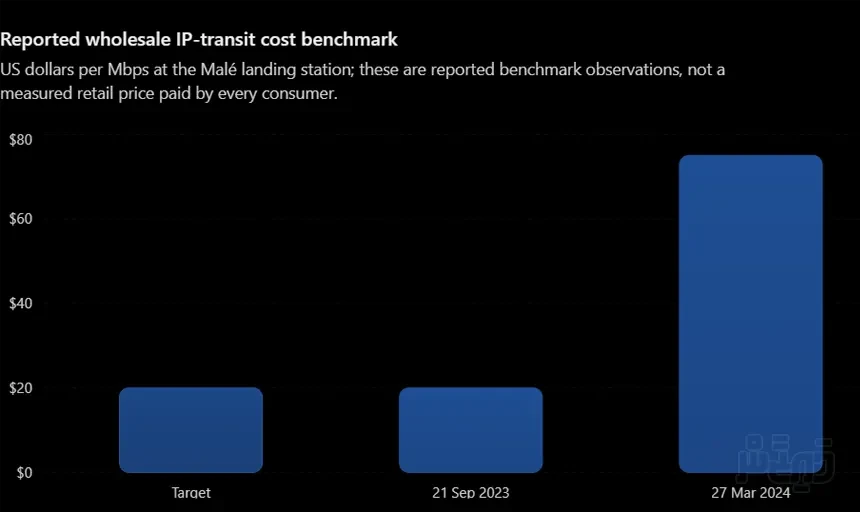
Source: UNDP, State of Digital Development in the Maldives, drawing on World Bank observations. These figures describe wholesale IP-transit costs, not household broadband packages or mobile-data tariffs
The rise from US$ 20 to US$ 75 is US$ 55 per Mbps, or 275 per cent above the US$ 20 benchmark. The reported US$ 75 figure is 3.75 times the target. These comparisons show why wholesale connectivity costs deserve attention; they do not prove that the OCM cable alone would have kept prices at US$ 20.
Nor does a reduction in wholesale prices automatically translate one-for-one into lower household bills. Retail prices also depend on domestic network costs, capacity purchases, taxes, equipment, electricity, customer support, competition and commercial pricing decisions. However, a functioning additional international gateway could give domestic providers another source of capacity and a stronger basis for negotiating supply agreements.
That is the economic opportunity: not a guaranteed discount of a particular percentage, but the chance to make lower-cost connectivity more achievable.
What households could have gained
If the cable had entered service as planned and delivered competitive wholesale capacity, the potential benefits could have included:
- Lower retail internet prices: if providers passed on a meaningful portion of wholesale savings to customers.
- More data for the same expenditure: if operators used lower capacity costs to offer larger data allowances or better-value packages.
- Better international connectivity: if the new route improved available capacity, routing options and network resilience.
- More competitive service offers: if the additional gateway reduced dependence on existing supply arrangements.
- Improved access outside the capital: if international savings were accompanied by investment in domestic networks and affordable backhaul to the atolls.
These are plausible economic channels, not confirmed benefits already lost in a precisely measurable amount. To establish the actual household impact, analysts would need historical retail tariffs, the wholesale rates paid by each operator, the capacity available under existing contracts and the prices OCM could realistically have offered.
Digital freedom is more than speed
Digital freedom also involves the ability to access information, communicate, run businesses and participate in society without unnecessary technical or economic barriers.
A country with diverse international routes and competitive capacity supply may be better placed to withstand a cable failure, negotiate favourable commercial terms and expand access to online services. An additional route does not automatically guarantee privacy, freedom of expression, cybersecurity or protection from censorship; those outcomes also depend on law, regulation, governance and technical safeguards.
Nevertheless, leaving a planned international gateway commercially inactive means the country may be missing an opportunity to diversify its digital infrastructure. For an island nation whose communities depend on international communications, the value of redundancy and resilience deserves to be assessed alongside price.
6. The business investment that may never arrive
A second cost is the investment that could have been attracted by a more competitive digital environment.
Tourism businesses need reliable payment systems, reservations platforms, cloud-based property-management software, digital marketing and communications with international customers. Banks and financial-service providers depend on secure, reliable links to external systems. Technology firms need affordable bandwidth to host services, move data and support clients in different markets.
A functioning OCM gateway could have strengthened the case for investment in several areas.
|
|
Data centres and cloud servicesBetter international connectivity could support investment in hosting, backup services, disaster recovery and cloud infrastructure. Such investment would still require competitive electricity costs, dependable domestic fibre, skilled staff, security and sufficient customer demand. |
|
|
Tourism technologyResorts, guesthouses, travel agencies and booking platforms could benefit from improved connectivity and lower operating costs, particularly where high-quality digital services are integral to international sales and guest experience. |
|
|
Remote work and digital exportsCompetitive connectivity could make it easier for Maldivians to provide software, design, consultancy, customer support and other digital services to international clients. |
|
|
Fintech and online servicesReliable international links can support digital payments, software platforms and data-intensive services. Investment would also depend on regulation, trust, cybersecurity and access to capital. |



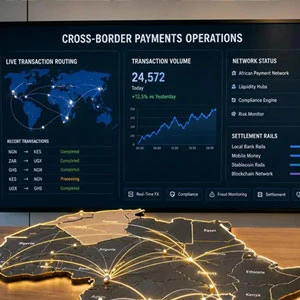
The potential opportunity cost includes jobs not created, businesses not established, exports not generated and productivity improvements delayed. Yet it would be misleading to attach a single monetary value to these losses without a credible economic model.
A serious assessment should estimate the number of firms that would have used OCM, the capacity they would have purchased, the difference between OCM's achievable price and competing offers, and the investment decisions that actually depended on that price difference. It should then compare those outcomes with a realistic alternative in which the project remains delayed.
The absence of that analysis is itself a public-policy problem. If a project is justified partly on its contribution to a new digital economy, government should publish how it expects those economic benefits to arise and how it will measure them.
7. Rasmalé (Fushidhiggaru): the scale of the competing commitment
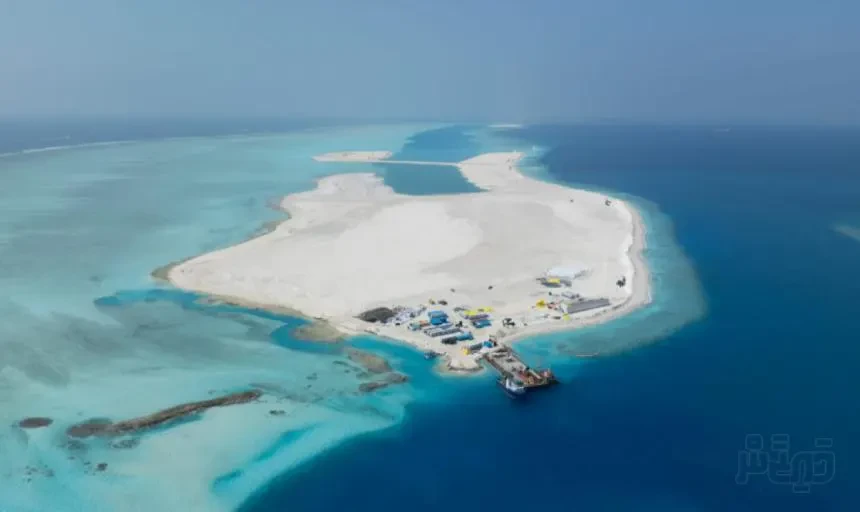
Photo reference: The President's Office published aerial and progress photographs of the Rasmalé reclamation site on 12 November 2025
The comparison with Rasmalé is politically significant because the two projects represent different approaches to national development: one seeks to expand the country's physical land and housing capacity, while the other seeks to strengthen the digital infrastructure on which future businesses and services could depend.
Rasmalé was inaugurated by President Muizzu on 18 December 2023 at Fushidhiggaru Falhu. At the launch, the President described a plan to reclaim 1,153 hectares and pledged completion within eight months. A later official update in November 2025 described the project as a 1,009-hectare development being implemented in phases. The difference between the originally announced area and the later stated area should be clarified in the project's published master plan and contractual documents.
In January 2024, the construction minister was reported as saying that the contractor's cost to reclaim Fushidhiggaru Falhu would exceed US$700 million, or approximately MVR10.7 billion at the conversion quoted at the time. The government said it would not incur an additional direct cash expense for the reclamation itself, with the contractor receiving 70 hectares of land in return.
This is a crucial distinction. The project has a large economic value, but the reported US$700 million-plus figure is the contractor's reclamation cost, not necessarily a cash payment from the Treasury. However, the initial cross-subsidization model (intended to cost the state nothing) wasn't materialised and so thus far MVR 1145.7 million of public money is already spent to reclaim 716 hectares and another MVR350 million more is planned to be spent. The transfer of land is allegedly not an in-kind consideration (with Eagle Hills and the Muizzu's government) with its own public economic cost: the state gives up the ability to allocate, lease, sell or develop that land under different arrangements.
The public cost therefore cannot be assessed solely by looking at whether the government writes a cheque. A full appraisal would need to account for the value of the land transferred, environmental and coastal effects, financing and infrastructure commitments, future maintenance, transport links, the value of the reclaimed land retained by the state and the housing benefits actually delivered.
The delivery and feasibility questions
The implementation record also warrants scrutiny. In December 2025, it was reported that reclamation had extended beyond two years and that the government was seeking consultants to prepare a transport master plan and assess connectivity between Malé and Rasmalé. And then was reported that the proposed underwater tunnel had not been shown to be technically feasible under existing open-sea conditions, according to the infrastructure minister (in October 2025).
These are important planning questions, but they do not by themselves establish that the entire reclamation project is wasteful. Housing scarcity is a real policy challenge, and land development can deliver public value if the land is serviced, affordable and allocated transparently.
The proper criticism is that ambitious announcements and physical reclamation should be matched by credible feasibility studies, transparent valuations, funding plans and a realistic schedule for housing and infrastructure. The same standard should apply to OCM-IAX.
Considering the scale of the two undertakings, it cannot prove that MVR10.7 billion was available for the cable. Rasmalé's reported arrangement involves land as consideration, while OCM has its own funding structure, contractual commitments and financing requirements.
The more defensible opportunity-cost question is whether the government has balanced the economic returns, social benefits, financing risks and delivery capacity of its major projects appropriately. Could a different sequence of public investments have delivered earlier digital-economy benefits? Could stronger oversight have kept the cable on schedule while housing development continued? Those are legitimate questions for the budget, The Cabinet, and the Parliament!
8. What should happen now?
The government has three broad options: complete the project under a revised financing plan, restructure the business with a suitable strategic partner, or consider an alternative arrangement if independent analysis finds completion uneconomic. The decision should be based on the value that can still be recovered, and that does not put the nation's sovereignty on an adventure; and merely not on political loyalty to the project or a desire to avoid acknowledging earlier problems.
A credible recovery plan should include the following measures.
- Publish the full audit findings. Release the OCM 2023 audit and relevant MFMC Capital audit schedules, including asset valuations, liabilities, late-payment costs, impairment assessments and management responses. Any commercially sensitive material should be redacted narrowly and with reasons.
- Reconcile every major financial figure. Provide a statement of project expenditure, equity injections, loan disbursements, outstanding contractor payments, sovereign guarantees, accumulated interest and remaining capital requirements. The statement should distinguish cash spent from contingent liabilities and accounting losses.
- Commission an independent completion study. Calculate the remaining cost to operationalise the cable, the expected wholesale price, projected demand, annual operating costs, financing costs and the break-even period. Compare completion against restructuring and exit options.
- Publish an operational timetable. Set dated milestones for equipment commissioning, network testing, regulatory approval, capacity agreements, commercial launch and first customer revenue. Publish progress against those milestones regularly.
- Protect the public interest in wholesale pricing. Require transparent and non-discriminatory access terms for eligible internet service providers, subject to the applicable legal and regulatory framework. Report wholesale prices and capacity utilisation so that claims of affordability can be tested.
- Measure the consumer benefit. Establish a baseline for retail tariffs, data allowances, service quality and coverage, then publish changes following the cable's commercial launch. This would make it possible to distinguish savings caused by the new gateway from wider market changes.
- Apply the same transparency to Rasmalé. Publish the land-transfer valuation, contractor agreement, funding obligations, environmental assessments, infrastructure costs, housing-allocation criteria and the timetable for delivering serviced plots or homes.
9. The unanswered questions for the President and Parliament
The OCM-IAX project presents a concrete test of whether public investment can be translated into public value. The questions are no longer limited to why a cable was laid or why a company needs financing. They concern what the government did after taking responsibility for moving the project forward.
President Muizzu's administration publicly chose to continue OCM-IAX in August 2024 and committed to addressing a funding obstacle. The later reports of continued suspension and additional costs make it reasonable to demand a full account of what happened next. The government should explain whether the funds promised were disbursed, whether they were sufficient, which additional obstacles emerged and what decisions were taken to resolve them.
Parliament should examine those questions through the relevant committees and require evidence from the Ministry of Finance, MFMC, OCM, the responsible telecommunications authorities and the Auditor General's Office. The objective should be to identify decisions, responsibilities and remedies rather than to substitute political allegations for findings.
The same scrutiny should apply to Rasmalé. If a land-reclamation project involves consideration worth billions of rufiyaa, the public deserves to understand the economic valuation of that consideration and the full cost of making the land useful. If an international cable has absorbed hundreds of millions of rufiyaa, the public deserves to know whether the remaining investment is justified and how the promised benefits will be delivered.
The country cannot evaluate competing priorities by comparing the headline numbers alone. It must compare realistic future returns, risks, affordability and the public benefits that each project is capable of delivering.
10. The verdict on public value: infrastructure is not an achievement until it works
The OCM-IAX project began with a clear ambition: give the Maldives another international digital gateway, improve connectivity and help create the conditions for a more diversified economy. The cable landing in 2023 was a real technical achievement. But the reported failure to turn that achievement into a functioning commercial service has placed public money and the project's intended economic benefits at risk.
The available record presents a troubling sequence: substantial expenditure, a financing shortfall, outstanding obligations, government-backed borrowing, a decision to continue the project and subsequent reports that it remains stalled. These circumstances justify serious questions about planning, financing, oversight and implementation. The precise financial loss, however, must be established from audited accounts and a current valuation of the assets and liabilities.
The comparison with Rasmalé sharpens the issue of priorities. A reclamation project can have a legitimate housing purpose, but its value depends on the terms under which land is exchanged, the cost of infrastructure, environmental impacts and the delivery of affordable housing. A digital infrastructure project can have significant long-term benefits, but those benefits remain unrealised if financing and operational arrangements are not completed.
The central public-interest question is whether the Maldives is getting the promised value from the money and assets committed in its name. The administration should publish the evidence needed to answer that question, explain the delays since its 2024 decision to continue OCM-IAX, and present a credible, independently assessed plan for the project's future.
For Maldivian households, the stakes are practical: the cost of staying connected, the quality and resilience of internet services, access to digital opportunities and the ability of local businesses to compete. For the economy, the stakes include whether the Maldives can build the infrastructure needed to attract investment beyond its traditional industries.
Those benefits cannot be counted as cash losses without evidence. But neither should the cost of delay be dismissed simply because it does not appear as a single line in the national budget. When a public project is intended to create economic opportunities, failure to deliver those opportunities is a legitimate subject of financial and political accountability.
The cable has reached the Maldives. The unanswered question is when the benefits it was built to deliver will reach the Maldivian people.