
No undocumented expats after "Operation Kurangi"
“Operation Kurangi” is a national level multi agency lead operation to gain 100 percent biometrically confirmed accountability of migrant workers in Maldives
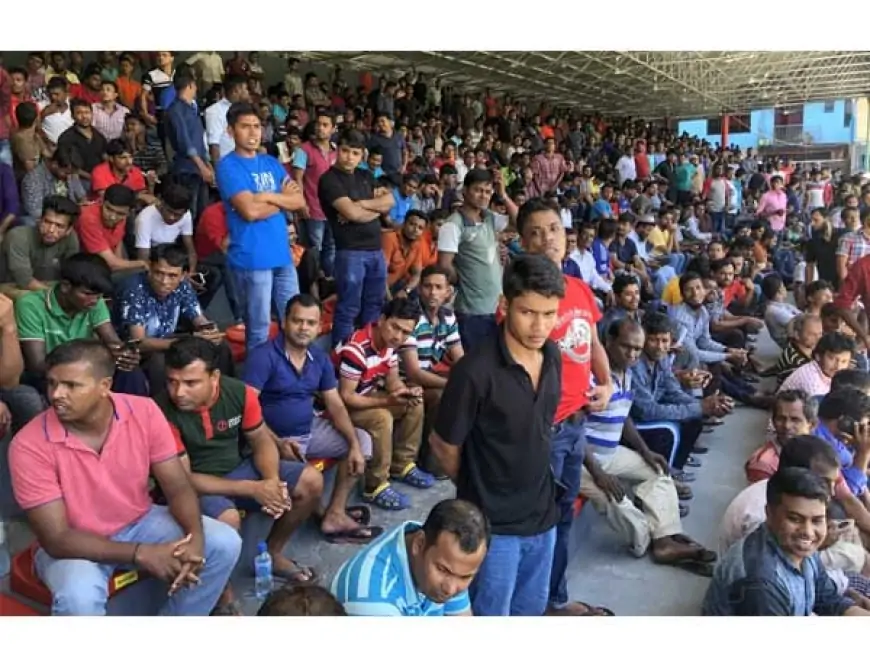
The government has launched a nationwide operation to address the issue of undocumented migrants. The ‘Operation Kurangi’ was initiated on Himmafushi Island in Kaafu Atoll.
The operation, inaugrated yesterday, at K. Himmafushi, led by the Ministry of Homeland Security and Technology, Maldives Immigration, and the Maldives Police Service, aims to identify undocumented immigrants, reintegrate them into the system, and regularise their status.
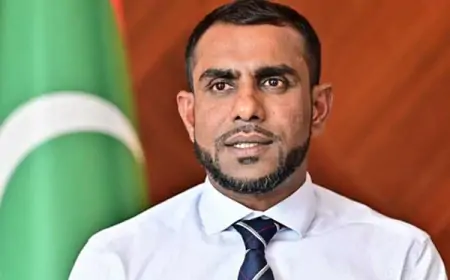
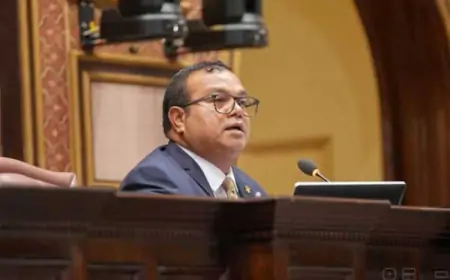
There will be no foreigners with unconfirmed information by the end of their image and fingerprint collection and subsequent legalization process, said Minister of Homeland Security and Technology Ali Ihusan.
Speaking with press after commencing the ‘Kuran’gi’, Minister Ihusaan said the goal is to only have foreigners with verified information in the country by the end of the campaign.
Minister Ihusan confirmed thorough background and preparatory works of the operation, prior to official commencement, were made in the last five months. The operation also serves the purpose of identifying root cause of illegal migrants' influx to the Maldives, and present a permanent fix to the issue.
The operation, which is expected to span three years, will initially focus on identifying undocumented immigrants and reintegrating them into the system. This phase is planned to be completed within a year.
Ihusaan underscored the issue of migrant workers being employed by an individual or company other than their sponsor. “Numerous individuals [immigrants] are engaging in this practice persistently. The societal implications of these actions are substantial. The risk posed to the state is also significant,” he said.

A similar campaign was also run by former President Ibrahim Mohamed Solih’s administration in 2019. With the aim of tackling the overwhelming number of undocumented migrants in the country, more than 40,000 migrants were registered in that project.
Reflecting on this previous experience, Minister Ihsan said that foreigners living in local islands faced many issues getting themselves registered, as the registration process was taking place in the capital, Malé.
To resolve this, arrangements have been made for photographing and fingerprint collection to be made from local island councils. If the islands are classified as resorts or industrial islands, members of the campaign’s taskforce will travel to the islands.
However, Ihusaan emphasised that the operation’s primary focus is not to arrest and deport immigrants but to identify them and their activities. He also stated that the authorities would facilitate undocumented immigrants seeking new sponsors and regularising within the system.
The minister also acknowledged the demand for unskilled labour in the Maldives, which he expects to increase with the launch of the government’s infrastructure development projects. He added that the authorities would create a list of immigrants working on each island and provide that list to the respective local councils.
From here on in, updating the information of foreigners living in the islands are made easy even for island councils, as the database will be shared with them as well, said the Minister.
The MDP-led administration had also suspended the issuance of work permits for unskilled labour from Bangladesh, as part of a comprehensive strategy to combat illegal immigration. However, this policy decision has been reversed by the current administration.
The previous government also initiated a programme to secure legal status for undocumented workers. The legislative cap on the number of migrant workers from a single country, who are permitted to enter and work in the country at any given time, stands at 100,000.
There has been concerns by the opposition and general public accusing the current government for classifying or restricting, or rather destroying the said previous register of undocumented immigrant workers.